
Growth
Gen Z is Not the Problem.

Silvia Oviedo López
Co-Founder & CEO
,
Blomma
6
min read
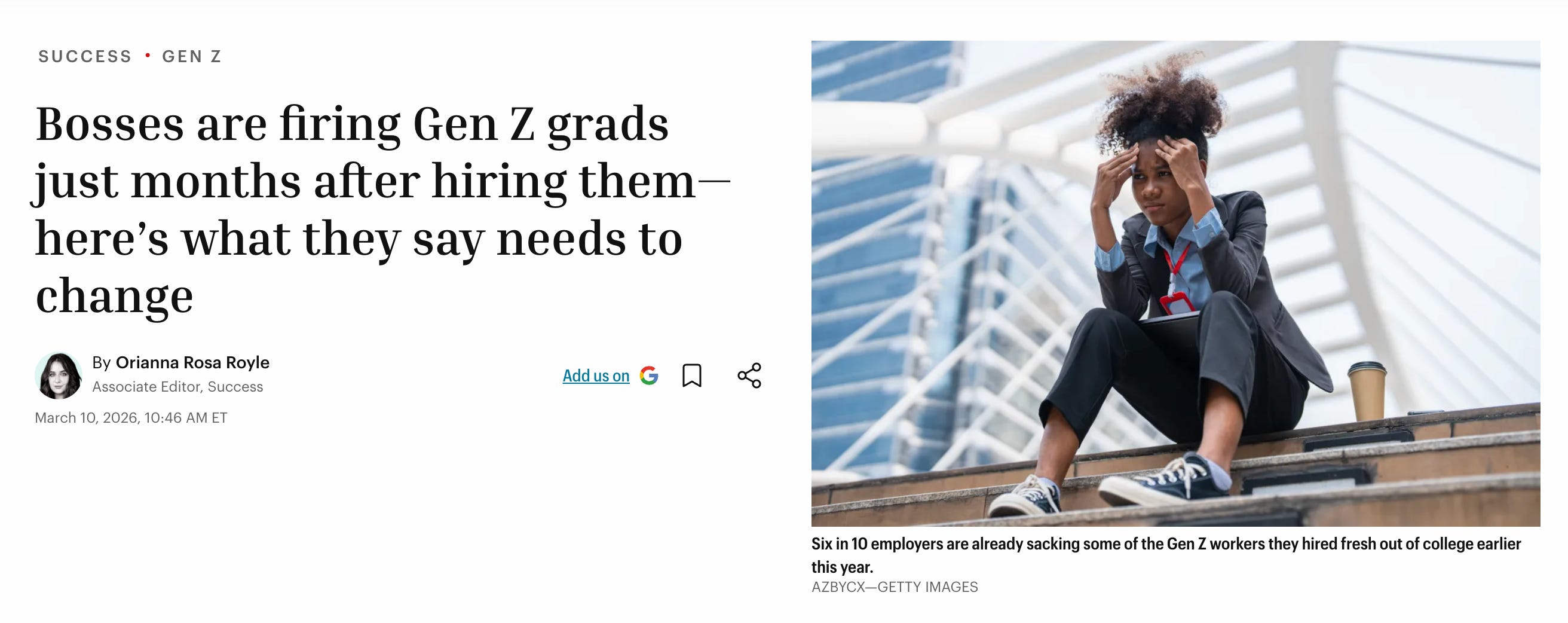
I'm here to give a hot take: Gen Z is not the problem. They are the preview.
Every generation seems to find every way to panic about the one coming next. They're too much of something. Not enough of something else. They don't work the way we did. They don't respect the same rules. They don't seem interested in proving themselves in the approved, familiar ways.
And sometimes that critique says less about them than it does about the world they're stepping into.
That's what I kept thinking as I read Fortune's latest article on Gen Z.
Because of course there are real skills that matter early in your career. Learning how to communicate well, follow through, read the room, build trust, and take initiative matters. These are not outdated ideas. They are part of becoming someone others can rely on.
But I think where we should be careful is when we typecast an entire generation and turn a messy transition into a morality play.
Because if large numbers of young people are entering the workforce feeling skeptical, disengaged, unwilling to perform certain norms, or simply unconvinced by the deal in front of them, that should make us curious. Not just about them, but about us.
What exactly are we asking them to join? What kind of workplace are we defending so fiercely?
A lot of modern work is still profoundly unsustainable. We have glorified burnout and called it ambition. We have rewarded overextension and called it leadership. We have built cultures where speed masquerades as clarity and constant availability gets mistaken for care. We have asked people to give more and more of themselves to systems that often give very little back. And then we seem surprised when younger workers look at all of that and think: I'm not sure I want this version of success.
Honestly? Fair enough.
This does not mean that every criticism of Gen Z is wrong. Some young workers absolutely need to build more resilience, stronger communication, more consistency. Growth matters. Maturity matters.
But growth is not the same as obedience.
What we are really talking about is not just Gen Z. We are talking about the future of work, and who gets to shape it. We are talking about whether the systems we inherited are actually fit for modern life.
All of us are responsible for building a world of work that is sustainable. Not just efficient. Not just profitable. Actually sustainable — sustainable for people's minds, bodies, relationships, attention, and long-term sense of self.
No one should be especially shocked if Gen Z ends up disrupting us all in the way millennial founders did twenty years ago. Not in exactly the same form, but in that same generational pattern where a group comes of age, sees the cracks in the system more clearly than the people who got used to them, and starts asking different questions. Harder questions. More inconvenient questions.
So when I look at Gen Z, I do not just see a generation that needs better training. I see a generation that may force a deeper reckoning about what work is supposed to be and how we bridge the gap between humans and technology.
That is not something I find threatening. It is something I find exciting.
If the next generation is pushing back, opting out, or reinventing the script, maybe the question is not just what needs to change about them. Maybe the question is what are they revealing about us?